
惊天解密Russia's Ouster From WTO Would Jeopardize West & Global South's Development, Scholars Warn_我的网站
A | "[O]usting Russia from the WTO would have a number of negative consequences, for Russia, of course, but also for other WTO countries, and even more so for all those countries that to date have been benefiting from the Russian WTO membership, particularly as regards the oil market and a number of industrial or consumer goods," says Sergio Rossi, professor of macroeconomics and monetary economics at the University of Fribourg, Switzerland.,Since its accession to the WTO, Russia has helped integrate Eastern and Asian countries into global trade and contributed to economic growth as well as firms’ profits, notably in those Western countries that imported a lot of Russian oil, iron, and steel, according to Rossi.,"The Russian participation in the WTO enlarged the spectrum of the latter so that it now covers all major economies around the world," the academic emphasizes. "On geopolitical grounds, it also helped counterbalance the US power, contributing to reducing the asymmetries and the monetary dominance of the US dollar at the global level. For the EU, Russia’s participation in the WTO gave rise to two major benefits. On the one hand, the EU member countries have been in a position to increase their exports to Russia, hence also the EU firms’ profits. On the other hand, these countries’ economies benefited from a huge reduction of their importing costs, as regards different trade barriers (tariffs and patents in particular).",The professor notes that Russia's impact on trade and investment within the framework of the WTO has been positive, given that it facilitated the expansion of foreign trade across the global economy, thereby creating jobs and investment opportunities for a number of Western countries.,Similarly, Russia's WTO membership has played a crucial role for the Global South as Moscow has often thrown its weight behind developing countries, highlights Dr. Anuradha Chenoy, professor of the Center for Russian and Central Asian Studies at Jawaharlal Nehru University.,"Russia has been a responsible member of the WTO," Chenoy stresses. "On many issues Russia sided with the countries of the Global South, because of rules like ‘Trade Related Intellectual Property Rights’ and patents were not in favor of developing countries. For example, during the COVID-19 pandemic, India and South Africa proposed an exceptional and temporary waiver on COVID vaccines, which were under patent by Western pharmaceuticals. Many countries of the South backed India and South Africa’s demand. So did Russia. But the Western block did not allow the patent regime to be diluted and big corporate profits continued. Many people in the South could not get the vaccine as a consequence.",RussiaMoscow Calls for Joint Work on Resolving Trade Issues Within WTO to Solve Food Crisis21 May, 18:42 GMT,Russia's Ouster From WTO is Highly Unlikely,The Russian Federation has been a member of WTO since 22 August 2012. Prior to that, it had worked hard for 19 years to meet the organization's requirements. After the beginning of the special operation to demilitarize and de-Nazify Ukraine, Russia was stripped of its "most favored nation" status, with some Western nations calling for the removal of the country from the international entity. However, as Reuters explained back in March, "expelling Russia, which joined the WTO in 2012 after 19 years of negotiations, would be extremely difficult as there is no specific expulsion process.","Ousting Russia from the WTO is not possible under the current WTO Agreement, as it does not encompass such a possibility," says Rossi.,He points out that Russia could be expelled only if two-thirds of the 164 WTO member countries backed such a decision which is highly unlikely. Neither China nor many other countries, including BRICS members, will ever agree to expel Russia "in light of economic advantages these countries benefit from having Russia within the WTO," according to the academic.,For his part, Chenoy underscores that Russia's hypothetical expulsion could create a disturbing precedent which "would be harmful for global trade and the rules-based order and international law.",EconomyUS Attempts 'to Strangle and Cripple' Russian Economy With Sanctions Failed, Russian Ambassador Says19 August, 10:49 GMT,Meanwhile, Russian lawmakers have also weighed the pros and cons of Russia's WTO membership. In April, State Duma Speaker Vyacheslav Volodin instructed relevant chamber committees to study the advisability of Russia's presence in the organization. The Communist Party of the Russian Federation and Liberal Democratic Party of Russia advocated for the nation's withdrawal from the WTO, arguing that Russia's accession to the WTO has made the nation's enterprises less competitive than their Western peers and failed to shield the country from Western sanctions.,For his part, Minister of Economic Development Maxim Reshetnikov argued on May 5 that Russia's exit from the WTO would, in particular, deprive the country of the opportunity to develop new rules for global trade. In addition to that, the WTO still remains an important tool to support Russian exports, the minister wrote in a letter, obtained by Russian media outlet RBC.,Controversies pertaining to the WTO were also discussed by BRICS members during the group's 14th summit in June. The leaders of BRICS states agreed to pursue "the necessary WTO reform" to build an open world economy and called on all WTO members to avoid unilateral and protectionist measures that run counter to the spirit and rules of the WTO.,"This WTO reform is welcome," says Rossi. "This reform should include also an agreement to dispose of the actual international monetary disorder, which is the result of the US dollar dominance that allows the United States to record enormous ‘trade deficits without tears,’ as the French economist Jacques Rueff noticed in the 1950s – that is, shortly after the 1944 Bretton Woods agreements, which put the US dollar at the center of the current international monetary regime. Time has come to get rid of this monetary disorder, which is a factor of financial instability and crises as well as of geopolitical turmoil across the global economy.",RussiaGlobal Power Shifting Away From West, While BRICS Expanding & Increasing Legitimacy14 July, 16:45 GMT,How West Has Shot Itself in the Foot,Meanwhile, the decision of the US, the European Union, Japan, and Canada to strip Russia of its "most favored nation" trade status will have a long-term negative impact on the global economy, according to Rossi.,"The global economy will suffer from this decision, because there will be an increase in the costs of foreign trade for all countries involved," the academic forecasts. "For instance, importing Russian oil and iron in the EU will cost more, as the importing firms will have to pay higher tariffs, which they will transfer to the so-called ‘global value chain’ through a higher mark-up of their own production costs.",As a result, one might expect "a mushroom growth of consumer prices, which – as we can observe now – implies a number of negative consequences for all stakeholders, particularly for the poor and the middle class, but also for small as well as medium-sized firms in Western countries," Rossi notes.,Europe is struggling to tame galloping inflation, which has been further accelerated by the anti-Russia energy embargo. The annual inflation rate in the EU climbed to a record high of 9.8% in July, according to Eurostat, the statistical office of the European Union. Likewise, inflation among the Eurozone countries hit a new high of 8.9%. The lowest annual rates were registered in France, Malta (both 6.8%) and Finland (8.0%), while the highest annual rates were recorded in Estonia (23.2%), Latvia (21.3%), and Lithuania (20.9%).,For its part, Russia won't be affected as dramatically as the West, as it is increasingly turning to the East and South, which can be bigger beneficiaries of trade with Russia, who is a prominent supplier of hydrocarbons, commodities, wheat, etc., according to Chenoy. Similarly, Russia's development within the BRICS framework is promising to be beneficial for the country and its partners.,"Countries of the BRICS together have a bigger GDP combined now than the G7 countries," Chenoy notes. "Trade in national currencies, new transport corridors can help the BRICS grow even further."。 刚刚,Claude 的两个全新模型被曝光!有开发者在 Anthropic 的 API 中发现了两个从未公开的模型代号:claude-marshmallow-eap 和 claude-melon-eap。 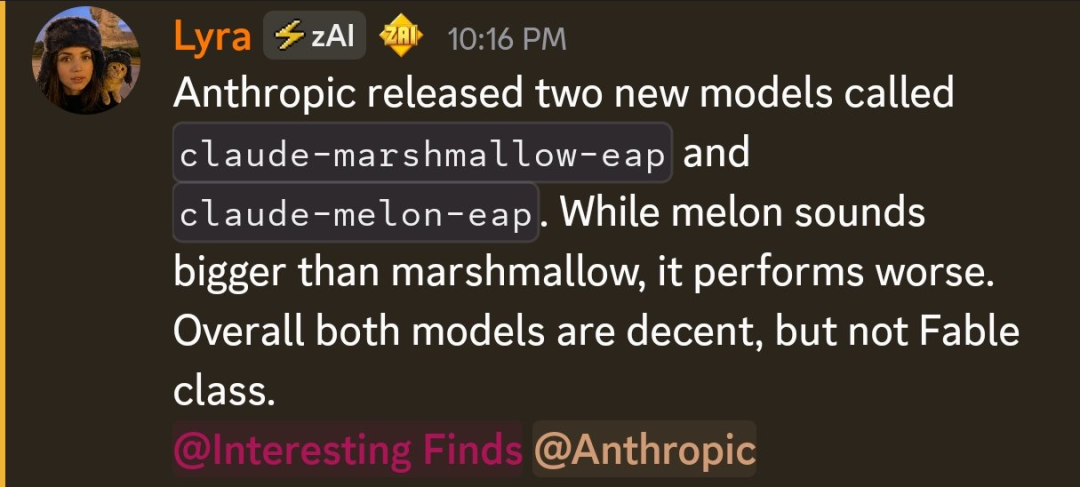 天呢,距离上次 Anthropic 的 Sonnet 5.5 模型泄露才过了十几天,就又有两个新模型出现了,这帮人不休息的吗?消息一经曝出,迅速引发社区讨论,多位开发者在 API 访问和 Discord 中确认了这两个代号的存在。从曝光的代号后缀eap(Early Access Program,早期访问计划)来看,这两款模型目前仍处于内部测试阶段,仅对少量开发者开放。几个关键信息点:两个代号均不属于 Fable 级别,社区普遍推测它们将作为 Opus 或 Sonnet 产品线的更新发布,也有人猜测可能包含新一代 Haiku早期测试者反馈,Marshmallow 的表现优于 Melon更引人关注的是,似乎 Marshmallow 的对话体验已经超越了当前的 Opus 5 天呢,距离上次 Anthropic 的 Sonnet 5.5 模型泄露才过了十几天,就又有两个新模型出现了,这帮人不休息的吗?消息一经曝出,迅速引发社区讨论,多位开发者在 API 访问和 Discord 中确认了这两个代号的存在。从曝光的代号后缀eap(Early Access Program,早期访问计划)来看,这两款模型目前仍处于内部测试阶段,仅对少量开发者开放。几个关键信息点:两个代号均不属于 Fable 级别,社区普遍推测它们将作为 Opus 或 Sonnet 产品线的更新发布,也有人猜测可能包含新一代 Haiku早期测试者反馈,Marshmallow 的表现优于 Melon更引人关注的是,似乎 Marshmallow 的对话体验已经超越了当前的 Opus 5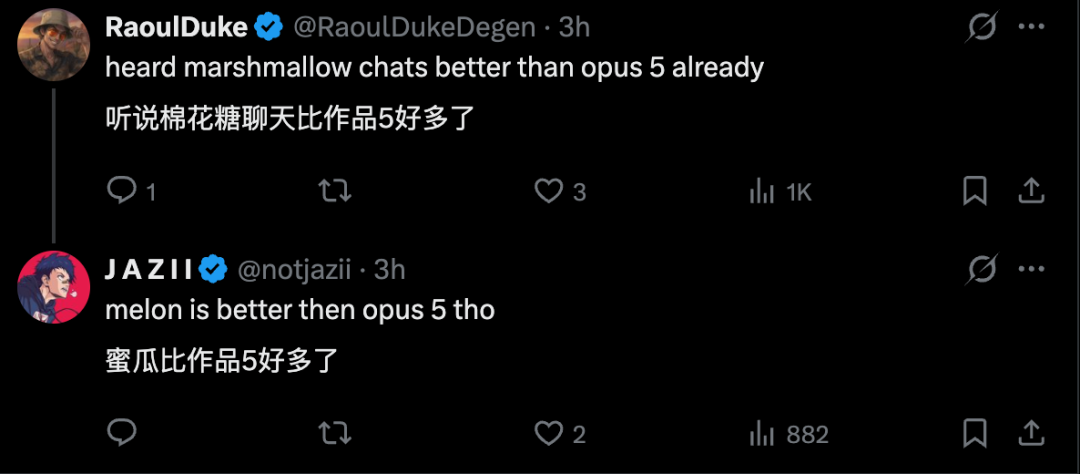 作为参考,Opus 5 于 7 月 24 日发布,距今刚好一个月;Sonnet 5 发布于 6 月 30 日。如果新模型确实即将推出,Anthropic 的迭代节奏将进一步加快。Anthropic 这次的模型内部命名风格也发生了改变。Anthropic 的公开模型一直沿用文学体裁命名:Haiku(俳句)、Sonnet(十四行诗)、Opus(大型乐章)、Fable(寓话)、Mythos(神话)。而内部开发代号此前被曝使用动物名称,就比如 Sonnet 5.5 的曝光模型的内部名称为Fennec(一种沙漠狐)。这次出现的Marshmallow(棉花糖)和Melon(甜瓜)显然转向了食物主题。代号本身不能说明太多,但命名体系的切换或许暗示这一批模型在内部归属于一个新的开发分支。 作为参考,Opus 5 于 7 月 24 日发布,距今刚好一个月;Sonnet 5 发布于 6 月 30 日。如果新模型确实即将推出,Anthropic 的迭代节奏将进一步加快。Anthropic 这次的模型内部命名风格也发生了改变。Anthropic 的公开模型一直沿用文学体裁命名:Haiku(俳句)、Sonnet(十四行诗)、Opus(大型乐章)、Fable(寓话)、Mythos(神话)。而内部开发代号此前被曝使用动物名称,就比如 Sonnet 5.5 的曝光模型的内部名称为Fennec(一种沙漠狐)。这次出现的Marshmallow(棉花糖)和Melon(甜瓜)显然转向了食物主题。代号本身不能说明太多,但命名体系的切换或许暗示这一批模型在内部归属于一个新的开发分支。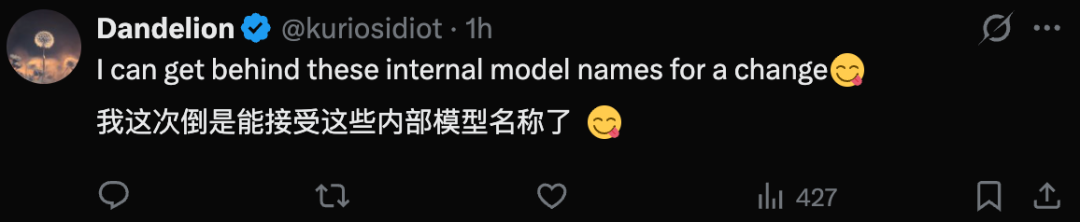 有分析指出,Anthropic 今年每隔大约两周就会推出一次重要更新。如果棉花糖和甜瓜已经进入 EAP 阶段,正式发布可能就在下个月。当然,内部测试代号出现在 API 中,并不等于产品已经定型。代号可能被重命名、合并,甚至取消。但考虑到当前大模型竞争的白热化程度,Anthropic 显然没有放慢脚步的打算。 有分析指出,Anthropic 今年每隔大约两周就会推出一次重要更新。如果棉花糖和甜瓜已经进入 EAP 阶段,正式发布可能就在下个月。当然,内部测试代号出现在 API 中,并不等于产品已经定型。代号可能被重命名、合并,甚至取消。但考虑到当前大模型竞争的白热化程度,Anthropic 显然没有放慢脚步的打算。
B | Current article:http://enn.qiuergejiaolaiaozhuangshi.buzz/xui2/oai.html Published on:05:09:13 |

